 Wodzu
Wodzu 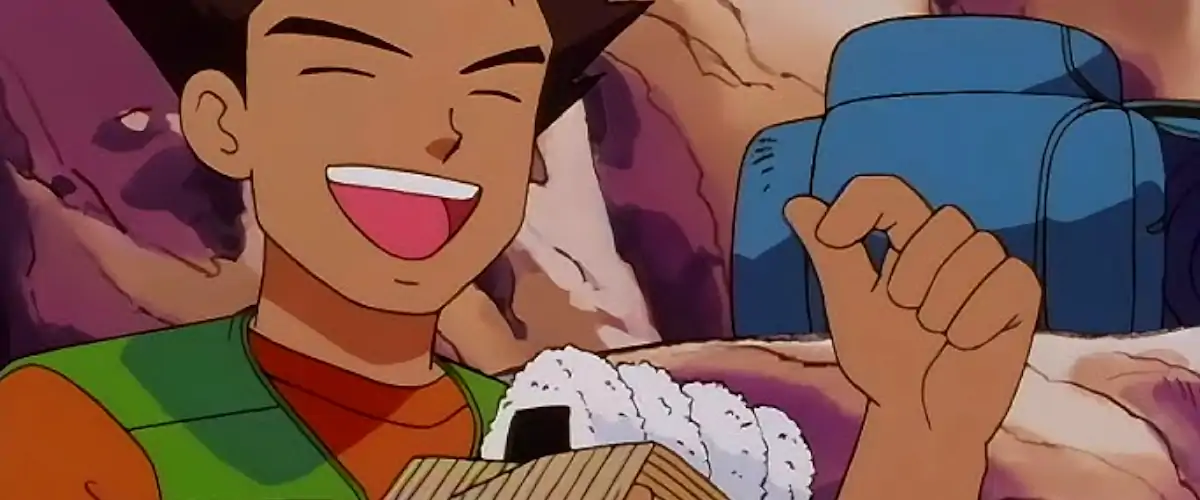
Brock jelly donuts – the history of the Pokemon anime meme
The Brock Jelly Donut meme originated from episode 25 of the Pokémon anime, “Primeape Goes Bananas.” In the English 4Kids version, Brock enthusiastically praises jelly-filled donuts while holding a prominent onigiri—Japanese rice balls—in his hand. Crucially, the scene has become a symbol of failed localization and one of the most frequently cited examples of absurd changes made by 4Kids Entertainment in its attempt to adapt anime to Western audiences.
How the meme originated—episode 25 and the localization decision
In the original Japanese version of the episode, Misty says that Brock should eat onigiri to comfort himself, and Brock describes the different fillings—round ones with pickled fruit, triangular ones with salmon. In the English 4Kids version, the dialogue was completely rewritten so that Brock says, “These donuts are great. Jelly-filled ones are my favorite.” Nothing beats a jelly-filled donut – even though the screen still shows triangular white rice snacks with a black nori strip, which bear no resemblance to donuts whatsoever.
Why the scene stuck with viewers
The absurdity was immediate and obvious – viewers saw triangular white objects and heard about round fried doughnuts. This cognitive dissociation ingrained the scene in the memory of an entire generation of Pokémon fans, who began to joke about the absurdity of the localization. Over time, Brock’s jelly donut became shorthand for all of 4Kids’ mistakes and overzealousness in removing Japanese cultural elements from the anime, as well as a universal symbol of poor translation practices.
What is onigiri and why were they called donuts?
Onigiri is a traditional Japanese snack—a hand-formed ball of cooked rice, often triangular, with a filling such as umeboshi (pickled Japanese apricots), salmon, tuna, or bonito, wrapped in a strip of nori for easier handling. It’s a staple of Japanese lunchboxes, the equivalent of a Western sandwich—a quick, cheap, and filling meal for takeout or picnics. 4Kids recognized that young children in the US didn’t understand onigiri and wouldn’t accept the exotic Japanese food as an everyday staple, so they replaced it with a donut—an item recognizable and popular in American culture.
4Kids’ Motivations and Localization Philosophy
Michael Haigney, localization director for the English version of Pokémon, explained in an interview that the decision was intended to make Pokémon universally accessible to children worldwide, not just in Japan. It was thought that more people would recognize donuts than sushi or other Japanese products, so the dialogue—though not the animation—was changed to fit a Western context. This strategy was also used in other countries—in Germany, they were also called donuts, not by the Japanese term.
Community Reaction and the Meme’s Development
As the internet became widespread, the truth about the onigiri came to light, and the scene exploded as a meme. Fans began creating jokes, images, and videos depicting the absurdity of the situation, and even the official Pokémon Twitter account consciously referenced the meme on National Donut Day 2019. The meme became legendary—used when discussing localization of Japanese food or generally questionable translation decisions in anime.
Have Newer Versions Fixed the Error?
Yes—later versions of the Pokémon dub corrected the translation, and onigiri are now called rice balls or simply rice, which is much closer to the original. Newer generations of viewers don’t experience the confusion associated with the donuts, but for fans who grew up with the 4Kids version, jelly-filled donuts remain an integral part of Pokémon nostalgia and meme culture.
What else 4Kids changed
Onigiri weren’t the only example – in the second episode of Pokemon Emergency, when Professor Oak is cooking ramen on screen, the dub says that his pizza has arrived. In other anime, 4Kids has cut entire plot threads, changed meals from rice to hamburgers, and removed all Japanese subtitles to create the impression of a Western product. However, none of these instances achieved the same fame as Brock’s jelly donut.
Brock Jelly Donuts – a symbol of an era and a lesson for localization
Brock Jelly Donuts are more than a funny meme – they’re a case study in localization decisions from the late 1990s and early 2000s, when the anime industry feared that Western children would reject Japanese culture. Today, we recognize that audiences are open to discovering new dishes and traditions, and authenticity is valued more than artificial universality. This meme forever reminds us that sometimes it’s better to leave onigiri as onigiri – because calling them donuts only created confusion and a legendary internet joke.
About the Author