 Wodzu
Wodzu 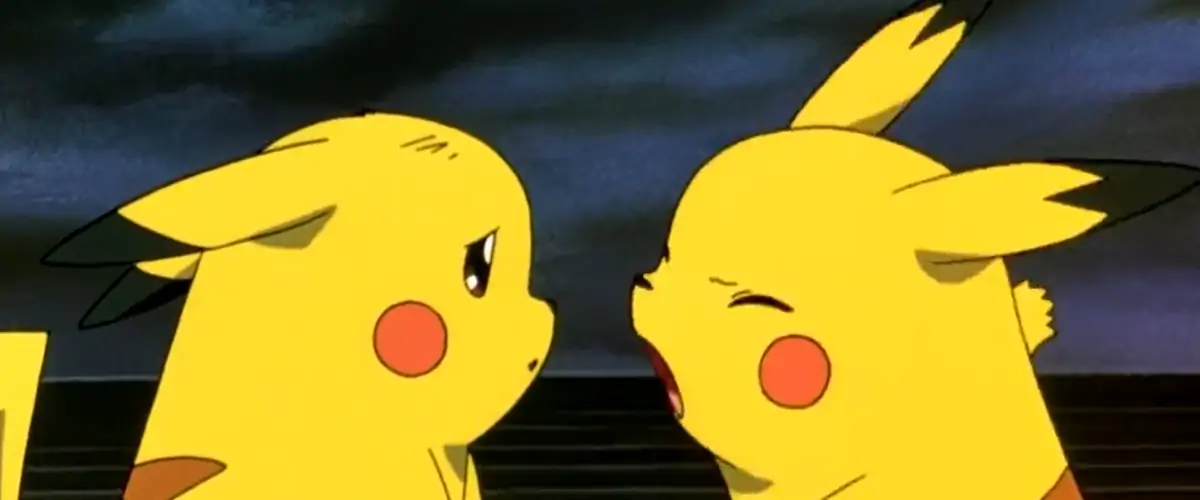
Pikachutwo: A clone of Pikachu from the Pokémon movie
Pikachutwo is a unique character in the Pokémon universe, known primarily from the animated films of this popular franchise. This electric creature, a clone of the original Pikachu owned by Ash Ketchum, has played a significant role in several films, introducing interesting themes regarding identity, freedom, and the relationship between original creatures and their clones. In this article, we will take a detailed look at its history, characterization, and significance within the broader Pokémon universe.
The Origin of Pikachutwo
Pikachutwo, also known as Cloned Pikachu, Mewtwo’s Pikachu, or simply Pikatwo, first appeared in “Pokémon: The First Movie” (original title “Mewtwo Strikes Back”), a 1998 Japanese animated science fantasy adventure film directed by Kunihiko Yuyama. The name, although never explicitly mentioned in the anime, was created in accordance with the naming conventions of other cloned Pokémon—by adding the suffix “two” to the original Pokémon’s name (similar to Mewtwo, Bulbasaurtwo, Charmandertwo, and Squirtletwo).
The story is inextricably linked to Mewtwo—a powerful psychic Pokémon created by scientists led by Professor Fuji. Mewtwo, itself a clone of the mythical Mew, after escaping from the laboratory, decided to create an army of clones to prove the superiority of artificial creatures over the originals. As part of this plan, Mewtwo invited selected Trainers (including Ash Ketchum, Corey, Fergus, and Neesha) to New Island, where he used a special cloning machine to create copies of their Pokémon.
Pikachutwo was created this way—from a DNA sample taken from Ash’s Pikachu. He was freed when Ash destroyed the cloning machine in a desperate attempt to save his friend. From that moment on, he became one of the most important members of Mewtwo’s clone army.
Characteristics and Personality
Although physically almost identical to Ash’s Pikachu, he is distinguished by the distinctive markings on his body that Mewtwo burned into all of his clones. These markings served as a visual distinction between the originals and the clones. In terms of appearance, he is a typical Pikachu—a yellow, electric rodent with red cheeks, long, pointed ears with black tips, and a distinctive lightning-shaped tail.
His personality differs significantly from Ash’s gentle and friendly Pikachu. The clone is much more aggressive and prone to violence as a solution to problems, rather than reason or diplomacy. This difference in personality is especially evident during their first encounter, when he mercilessly attacks the original despite its refusal to fight.
He demonstrates a strong sense of loyalty to Mewtwo, considering it his leader and mentor. At the same time, like the other clones, he feels a deep frustration at having to hide from humans and the limitations imposed by their clone status.
Role in “Pokémon: The First Movie”
In “Pokémon: The First Movie” (Mewtwo Strikes Back), he plays a key role in the climactic battle where the original Pokémon fight their copies. While the other creatures fight their counterparts, the copy faces a brutal confrontation with Ash’s Pikachu. This fight is particularly moving because the original Pokémon steadfastly refuses to attack its clone, despite not showing it the same mercy.
This scene is one of the most emotional moments in the film, highlighting the contrast between the original Pikachu’s attitude—which sees the clone not as an enemy but as a being worthy of respect—and the aggressive attitude of Pikachutwo, which fights until the very end, even when exhausted and barely able to stand. This confrontation symbolizes the broader conflict of values depicted in the film: the struggle between hatred and acceptance, between violence and reconciliation.
At the end of the film, when Ash sacrifices himself to stop the fight between Mew and Mewtwo and is turned to stone, the tears of all the Pokémon (both originals and clones) bring him back to life. This moment also marks a turning point for Pikachutwo, who, along with Mewtwo and the other clones, flies away to find his place in the world
Mewtwo Returns – Pikachutwo’s Continuing Story
Pikachutwo returns in the sequel, “Pokémon: Mewtwo Returns” (originally “Mewtwo Returns”). In this film, we learn that the clones have found refuge on Mount Quena, where they live in hiding from humans, particularly Giovanni and Team Rocket, who are constantly hunting Mewtwo.
When Ash, Misty, and Brock accidentally stumble upon Mount Quena, it reacts hostilely upon seeing Ash’s Pikachu, blaming him for bringing humans to their sanctuary. Despite Mewtwo’s orders to cease its aggression, it charges at Ash’s Pikachu, only to be stopped by Mewtwo at the last minute.
In the film, we discover that it harbors a deep resentment towards Ash’s Pikachu, as it is free to roam and do as it pleases, while the clones are forced to constantly hide. He staunchly opposes Mewtwo’s proposal to leave Mount Quena and find another hiding place, insisting that they should fight for their freedom.
The next morning, he leads a group of rebellious clones, along with Ash’s Pikachu and Meowth, into battle against an approaching Team Rocket combat unit. Despite their efforts, they are all defeated by a combination of Giovanni’s helicopter’s paralyzing cannon and Pokéballs dropped from airships. In this dramatic moment, Ash’s Pikachu attempts to save his clone by fending off a Pokéball flying at Pikachutwo with Thunderbolt. This act seems to soften his stance towards the original, and from then on, the two are seen together.
Later, he and Ash’s Pikachu become an example of Team Rocket’s cruelty when elite agent Domino attacks them with her electrostatic tulip, throwing them against a rock to prove to Mewtwo that they are not afraid to harm Pokémon. Both electric creatures are later revived by the water of Purity Spring, a miraculous spring hidden in the center of the island. This miraculous rebirth prompts Pikachu to suggest the spring as a solution for the gravely injured Mewtwo.
At the film’s climax, they join forces, using their shared Thunderbolt to destroy one of Team Rocket’s machines. This is the only time (besides a brief, cutaway shot seen earlier) that he uses an electric attack.
Pikachutwo’s Significance in the Pokémon Universe
Pikachutwo’s character brings deeper reflections to the Pokémon franchise on identity, freedom, and the relationship between natural and artificial beings. His story illustrates how beings created in a laboratory can develop their own personalities, desires, and aspirations, independent of their creators or originals.
The evolution of the relationship between electric Pokémon—from hostility to cooperation—symbolizes the possibility of reconciliation and mutual understanding despite differences in origin. This transformation reflects a broader theme present in many Pokémon stories: the importance of connection, empathy, and acceptance of diversity.
Pikachutwo, along with other clones, also raises important ethical questions about cloning and the rights of human-made creatures. Do clones deserve the same rights and respect as natural beings? Should they be treated as separate entities with their own desires and needs, or merely as copies of the originals? These questions, although presented in the context of the fictional Pokémon universe, reflect the real-world ethical dilemmas surrounding the development of biotechnology.
Influence on Fans and Popular Culture
Although he has only appeared in a few films, he has gained significant popularity among Pokémon fans. His distinctive appearance and complex personality have made him one of the most recognizable clones in the universe.
It’s worth noting that he also appeared in the remake of the first film, “Mewtwo Strikes Back—Evolution,” where he played the same role as in the original. His presence in this reimagining demonstrates the character’s importance to the overall narrative of Mewtwo and his clones.
While not as iconic as the original Pikachu, he remains an important element of Pokémon mythology, reminding fans that even in a world of colorful, friendly creatures, there are deeper, more complex themes of existence, identity, and morality.
Summary
Pikachutwo is a fascinating character in the Pokémon universe, whose story transcends the typical narrative of Trainers and their creatures. As a clone of Ash’s Pikachu, he represents broader themes of cloning, identity, and freedom, bringing a deeper philosophical layer to the Pokémon world.
From his brutal battle with the original in “Pokémon: The First Movie” to his collaboration in “Pokémon: The Return of Mewtwo,” his evolution reflects the possibility of overcoming hatred and finding common ground despite differences in origin. This journey makes him one of the most complex and compelling characters in the Pokémon cinematic universe.
Whether viewed as an antagonist, a tragic figure, or a symbol of hope for reconciliation, he remains a vital element of the rich mythology of the Pokémon world, reminding us that even in a fictional universe full of colorful creatures, profound reflections on the nature of existence and the value of all life can be found.

About the Author