 Wodzu
Wodzu 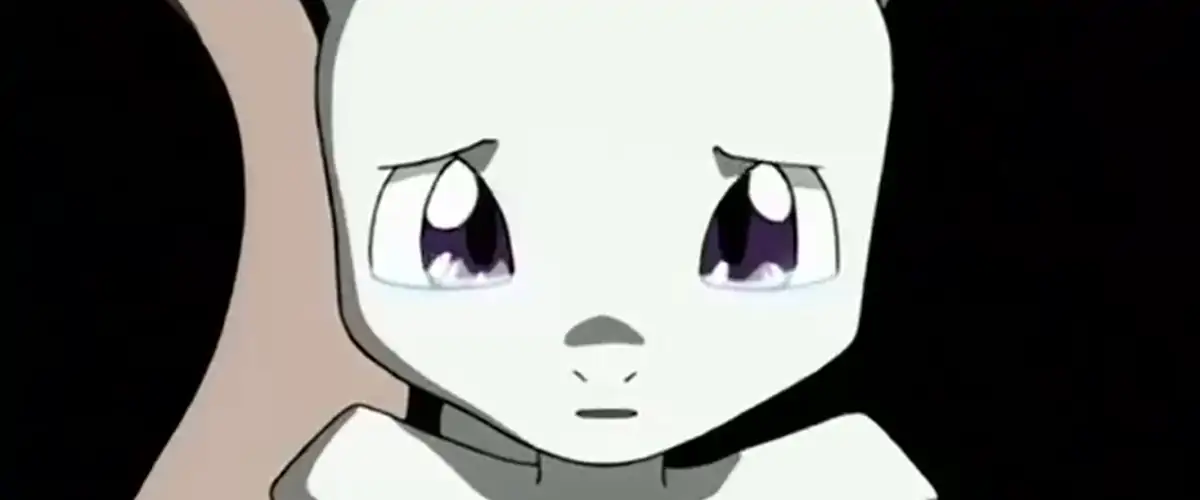
The Uncut Story of Mewtwo’s Origin – the complete story of Mewtwo
The Uncut Story of Mewtwo’s Origin is a ten-minute animated prologue to the film Mewtwo Strikes Back, revealing a deeper, darker version of Mewtwo’s birth and first experiences of consciousness. Crucially, the uncut version tells the story of the child clones and the friendship between young Mewtwo and Ambertwo—a clone of Dr. Fuji’s deceased daughter—a story missing from the theatrical release in Western countries, where these scenes were initially cut out for fear of being too dark for a child audience.
Origins – From Radio to Animation
The Mewtwo story began as a five-episode radio drama written by Takeshi Shudo and broadcast in Japan in June and July 1998, just before the theatrical release of Mewtwo Strikes Back. The broadcasts presented Mewtwo’s backstory in audio format with narration and dialogue, revealing details not seen in the film. Later, in 1999, the material was adapted into animated form, which was added to the Japanese home and television versions of the film from the third release onward. Western audiences first saw these scenes in 2001 as a bonus feature on the DVD Mewtwo Returns.
Plot – Dr. Fuji and Cloning
Dr. Fuji leads an expedition, funded by Giovanni, to search for Mew remains in the jungles of South America. His official goal is to create the strongest Pokémon for Team Rocket, but his true motivation is personal – Fuji wants to use cloning technology to bring his deceased daughter, Amber, back to life. After finding Mew’s DNA, the scientific team begins experiments that produce not only Mewtwo but also clones of other Pokémon – Bulbasaur, Charmander, Squirtle – and Ambertwo, a clone of a girl.
Mewtwo as a Child and Friendship with Ambertwo
Young Mewtwo awakens to consciousness in a laboratory tank, hearing the voices of scientists but unable to understand speech. Through telepathy, he establishes contact with Ambertwo, who explains the concepts of person, Pokémon, communication, and existence to him. A deep bond develops between them, as Ambertwo teaches Mewtwo the meaning of life, questions about one’s identity, and that it doesn’t matter who you are, only what you are. Mewtwo also meets other Pokémon clones, forming an innocent group of friends in the artificial world of tanks.
Tragic Ending – Clone Instability
The cloning process proves unstable – one by one, the Pokémon clones begin to fade, perishing before Mewtwo’s eyes. Eventually, Ambertwo also dies, telling Mewtwo that she will remember their friendship and that life is a brief, beautiful thing. The trauma of this loss is so intense that Dr. Fuji decides on a radical step – erasing Mewtwo’s memories and putting him into a sleep state to complete his physical development without further mental suffering. This memory erasure leads to amnesia, which explains the emotional emptiness and lack of understanding of his own existence with which Mewtwo awakens in the film.
Why was it cut from the Western theatrical release?
The scenes featuring Ambertwo and the dying clones were considered too dark and emotionally complex for young audiences in Western cinemas. Localizers feared that the subject of a child’s death and the Pokémon’s existential trauma would be too accessible for children and parents. As a result, The Uncut Story was completely omitted from the original theatrical and VHS releases in the US, leaving Western audiences with a simplified version in which Mewtwo is born as an adult and immediately begins his rebellion.
Differences between the radio, anime, and film
The radio drama included even more context—subplots related to Jessie’s mother from Team Rocket, details about the expedition, and Dr. Fuji’s deeper motives, which are not present in the animated adaptation. The animated version of The Uncut Story shortened the radio drama to ten minutes, focusing on Mewtwo and Ambertwo without any subplots. The theatrical film doesn’t show Mewtwo’s childhood at all, starting only with the scene where he awakens as an adult and begins his rebellion against the scientists.
Impact on the Perception of Mewtwo
The full version radically changes the perception of Mewtwo—from the arrogant, megalomaniacal villain he was in Western cinema, he becomes a tragic figure marked by loss, trauma, and questions of identity. His words about how the circumstances of birth don’t define the value of life take on a completely different meaning when we know that he’s speaking from a being who remembered the deaths of his friends and was forced to forget. The Western localization also changed Mewtwo’s personality to a more unambiguously evil one, a decision made by the dubbing director, who believed that American audiences needed a clear antagonist.
Where to Watch The Uncut Story Today
The animated version of The Uncut Story of Mewtwo’s Origin was officially available on the DVD release of Mewtwo Returns from 2001, as well as in the Japanese releases of Mewtwo Strikes Back. It can also be easily found online, for example on Reddit. The radio drama never received an official English adaptation, but fan translations and recordings circulate online. Scenes from Ambertwo are now considered canon in Mewtwo’s history, though many fans only discovered them years after the film’s release.
Summary – The Full Story as the Key to Mewtwo
The Uncut Story of Mewtwo’s Origin is the missing piece of the puzzle, explaining the motivations, emotions, and philosophy of one of the most iconic Pokémon. The story of friendship with Ambertwo, the trauma of loss, and a wiped memory give Mewtwo a depth lacking in the Western theatrical version of the film. Although initially cut for fear of being too dark, it is now considered essential context for understanding why Mewtwo questioned who he was, where he came from, and what right he had to exist—questions that sound completely different when we know the full story of his birth.
About the Author