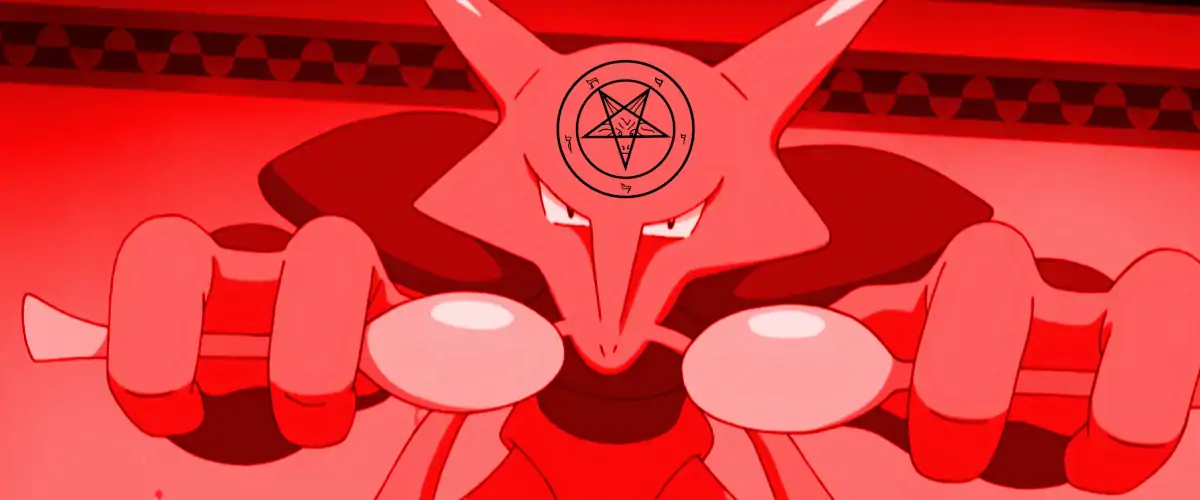
Satanic Poku00e9mon – Poku00e9mon referencing Satanism and demons?
The idea of u200bu200bSatanic Poku00e9mon has resurfaced in waves with the series’ popularity, but its core remains the same: a cycle of moral panic and misinterpretation, not a description of the creators’ real intentions. The bottom line is that Poku00e9mon is a fictional world of adventure, cooperation, and athletic competition, and the alleged Satanic tropes stem from erroneous analogies to demonology, linguistic misunderstandings, and the conflation of fantasy with religious practices.
Main Accusations and Their Origins
The most frequently cited accusations include resemblance to demons, talismans, Evolution, and Psychic and Ghost powers. Critics have claimed that the creatures are summoned and controlled like spirits, Badges are magical amulets, Evolution Stones are occult in nature, and Evolution itself promotes a worldview contrary to faith. Elements of Eastern spirituality, incorrectly identified with pagan practices, and alleged hidden messages in musical pieces, which are now classified as hoaxes and urban legends, have also been pointed out.
How realistic is the interpretation of these elements?
Evolution in Poku00e9mon is a developmental mechanic closer to metamorphosis than to a scientific theory of species; it serves to advance the game and balance battles. Badges are sporting rewards for victories, and Evolution Stones are narrative catalysts for form changes, not ritual props. The Psychic and Ghost types are fantastical abilities in the conventions of fairy tales and science fantasy, unrelated to occult instruction. In other words, religious meanings were externally imposed, through analogies, not by the game’s content. After all, people tend to look for references that confirm their thesis simply because they want to confirm it.
Examples of Narratives from the Age of Panic
In the 1990s and early 2000s, some religious groups accused the series of Satanism, linking the brand’s popularity to concerns about its influence on children. The arguments were recurring: demons to tame, talismans, evolution, paranormal powers, and even myths about playing songs backwards to find messages. False etymologies of names also circulated online, assigning offensive meanings to the characters. Research into these false names identified them as fabricated chain letters and forum posts that spilled into the media.
Reactions and Public Opinions
In many Christian circles, the accusations were deemed baseless, and elements of the series were interpreted as morally neutral or positive u2013 emphasizing friendship, loyalty, and cooperation. There are also voices from institutions recognizing that games and cards have no harmful moral consequences and are based on strong bonds of friendship, which tempered emotions and stopped the escalation of panic in some countries.
Why have the theories persisted so long?
These narratives are resonant because they combine simple associations: if spirits and psychic powers exist in the game world, some readers can easily draw an analogy to demonology. If progress is called Evolution, it is linked to ideological debates. If there are Badges and Stones, they fit the image of amulets. This kind of mental shortcut is attractive in stories, especially when it concerns a global phenomenon and children’s pop culture. Symbols like stars can easily be transformed into pentagrams. Preachers of all stripes often use pop culture series as the target of their crusades. This slog has also happened with Harry Potter, for example.
How to Discuss Controversy Responsibly
- Separate the plot and game mechanics from religious practices u2013 these are different things that don’t even have to conflict.
- Verify sources u2013 many high-profile claims have been made on forums, without being confirmed by reliable studies.
- Discuss values u200bu200bu2013 cooperation, empathy, responsibility, and sportsmanship are the real core of the message.
- Establish house rules consciously u2013 screen time, age-appropriate content, and discussing the difference between fiction and life.
Of course, conversations on these topics are becoming less common. The resurgence of these issues was slightly noticeable with the release of Poku00e9mon GO, whose incredible success revived the brand in most people’s minds.
Summary u2013 Satanic Poku00e9mon as an Interpretive Myth
The question of whether Poku00e9mon alludes to Satanism and demons stems from a confluence of overinterpretation and moral panic, not from the intentions of the creators or the content of the series. An analysis of the underlying themes reveals that the controversy was based on flawed analogies u2013 evolution as metamorphosis, powers as a fantasy convention, and Evolution Badges and Stones as mechanisms of progression. Today, the dispute functions primarily as a historical curiosity and a reminder to read pop culture carefully, in context, and without hasty judgments.
u00a0

 Wodzu
Wodzu