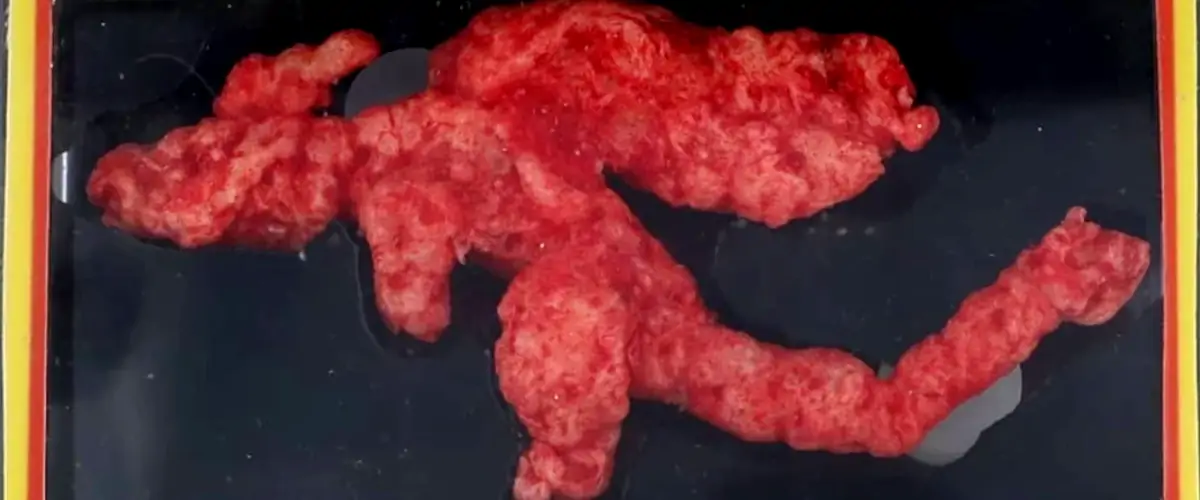
Cheetozard: a hot cheeto that looks like the Pokemon Charizard
The world of Pokémon collectors and fans was surprised when an unusual item appeared at auction – a Charizard-shaped Flamin’ Hot Cheeto, quickly dubbed „Cheetozard” by internet users. This unassuming piece of snack food became a social media sensation, fetching exorbitant prices at auction and sparking debates about the value of unusual collectibles. Let’s take a closer look at this fascinating phenomenon that has connected the world of popular snacks with the Pokémon universe.
The Story of an Unusual Find – a Pokémon Snack
It all started when a lucky consumer opened a package of Flamin’ Hot Cheetos and noticed that one of the snacks bore a striking resemblance to Charizard – the popular fire dragon from the Pokémon video game and anime series. Instead of immediately consuming his find, the owner decided to document it on Instagram, where the photo quickly went viral.
Internet users were amazed by the resemblance – the Cheeto truly resembled Charizard’s distinctive silhouette, with its outstretched wings, long neck, and flame-tipped tail. Moreover, the fiery red color of the Flamin’ Hot Cheeto perfectly matched the Pokémon’s Fire type, further enhancing the resemblance.
The photo began circulating across various social media platforms, gaining thousands of likes and shares. Users began calling the find „Cheetozard,” combining the names Cheetos and Charizard into a catchy neologism that quickly caught on.
The Auction That Surprised Everyone – $60,000
Seeing the overwhelming interest, the owner of the Cheetozard decided to auction off his find. Initially, many considered it a joke, but things took an unexpected turn when bidding began on Goldin Auctions, a renowned auction house specializing in collectibles.
The auction began with a modest $50, but the price quickly escalated. Pokémon fans, curio collectors, and investors seeking unusual assets began bidding ever higher. Within days, the price exceeded $1,000, and the media began to write about this extraordinary phenomenon.
Ultimately, to everyone’s surprise, the Cheetozard sold for a staggering $60,000. The buyer was Goal Collectibles, a company specializing in unusual collectibles, which recognized the Cheetozard’s potential to become an iconic element of pop culture.
The Cheetozard Phenomenon in a Cultural Context
The Cheetozard phenomenon didn’t just appear out of nowhere—it’s part of a broader trend in which everyday objects resembling popular characters or objects are gaining collectible status. Previous similar stories included a McNugget shaped like a character from the game Among Us, which sold for nearly $100,000, and a cereal resembling the United States.
Interestingly, Cheetozard appeared at a time when Pokémon cards were experiencing a resurgence in popularity, with their prices breaking records in the collectors’ market. A 1st Edition Charizard card (so-called 1st Edition Charizard) fetched prices reaching hundreds of thousands of dollars. In this context, Cheetozard became a joke, but also a commentary on the collector craze and price inflation in the Pokémon-related item market.
It’s also worth noting that Cheetozard appeared at a time when a „rap beef” was ongoing on social media between several well-known artists, which further attracted attention to the phenomenon. Some rappers even began mentioning Cheetozard in their songs, further cementing its place in pop culture.
Controversy and Doubts
As might be expected, such a high price for a piece of the snack has sparked numerous controversies and questions. Many internet users expressed doubts about the auction’s authenticity, suggesting it could be a planned marketing move by Cheetos or an attempt to manipulate the collectibles market.
Others wondered how to verify the authenticity of the Cheetozard – after all, it is a food product that degrades over time. Goal Collectibles assured that the Cheetozard was properly secured and placed in an airtight container filled with an inert gas to prevent it from decomposing.
Legal questions also arose – is the sale of a food product as a collectible subject to the same regulations as food sales? Could PepsiCo, the owner of the Cheetos brand, claim the rights to the Cheetozard image? These questions remain largely unanswered, adding an additional layer of mystery to the entire situation.
Impact on Internet Culture
Cheetozard quickly became a meme and a part of internet folklore. Numerous parodies, remakes, and jokes based on this phenomenon were created. Some users began searching through their Cheetos bags in hopes of finding similar shapes, then posting them on social media with the hashtag #Cheetozard.
Cheetozard’s popularity also led to the creation of an entire submarket of „food that looks like something.” People began paying more attention to the shapes of their snacks and posting photos of those that resembled popular characters or objects.
Interestingly, this phenomenon also influenced the way some artists began creating Pokémon-related art. Cheetozard-inspired sculptures, paintings, and installations emerged, combining elements of pop culture, consumerism, and Pokémon nostalgia.
Official Reaction
Both PepsiCo (owner of the Cheetos brand) and The Pokémon Company (owner of the Pokémon rights) initially refrained from commenting on the Cheetozard issue. However, when the phenomenon reached its peak, PepsiCo issued a brief statement jokingly addressing the situation, stating that „Flamin’ Hot Cheetos come in all shapes, sometimes even legendary.”
The Pokémon Company remained more reserved, which is understandable given their cautious approach to intellectual property protection. Unofficially, however, some company employees expressed amusement on social media.
Interestingly, neither company took legal action, which might suggest they viewed Cheetozard as a form of organic marketing that ultimately benefits both brands.
Cheetozard as an Investment
For Goal Collectibles, the company that acquired Cheetozard, it wasn’t just an extravagant indulgence, but a well-thought-out investment. In an interview with a financial portal, a company representative explained that unique items related to pop culture can appreciate significantly over time.
„Cheetozard combines two powerful elements of nostalgia – Pokémon, which are a part of millions of people’s childhoods, and Flamin’ Hot Cheetos, which are an iconic snack. This combination, plus the viral nature of the phenomenon, makes it a potentially very valuable asset in the long term,” explained a representative from Goal Collectibles.
The company plans to display Cheetozard at various pop culture exhibitions and events, and in the future is considering creating an entire collection of „foods reminiscent of pop culture icons.”
Cheetozard’s Legacy
Although Cheetozard’s popularity has passed, its influence on internet culture and the collectibles market is still felt. It has become a symbol of the absurdity of some aspects of the collectibles market, but also an example of how, in the age of social media, an ordinary item can gain immense value thanks to its uniqueness and association with popular brands.
Cheetozard also reminds us of the power of nostalgia and its influence on our purchasing decisions. Pokémon, which for many adults represent a carefree childhood, have the power to imbue even objects as mundane as a snack.
Moreover, this phenomenon demonstrates how the boundaries between various forms of intellectual property, marketing, and art are blurring in the digital age. Is Cheetozard a food product, a work of art, a collectible, or perhaps all three? This ambiguity is part of its charm and why it has resonated so strongly with online audiences.
Summary
Cheetozard, a seemingly trivial snack resembling the shape of a popular Pokémon, has become a fascinating case study in contemporary internet culture, the collectibles market, and the power of brands. Its journey from a mere Flamin’ Hot Cheeto to an item worth tens of thousands of dollars illustrates how value can be created from almost nothing these days, if it attracts the right attention.
Whether we consider Cheetozard a fun curiosity, a serious investment, or a symptom of broader social issues related to consumerism, it’s undeniable that it has become a part of internet folklore and an example of how unexpected combinations (in this case, snacks and Pokémon) can resonate with a global audience.
Will anyone even remember Cheetozard in a few years? It’s hard to say. But one thing is certain: as long as we eat snacks and love Pokémon, there will always be a chance for another viral phenomenon to emerge that combines these two worlds in an equally unexpected way.

 Wodzu
Wodzu