Bird Type Pokemon – History of the Removed Bird Type
The Bird type (Japanese: とりタイプ) is a fascinating element of Pokémon franchise history, never officially introduced in the games, but traces of which can be found in the code of the first two generations. This unused mechanic provides an interesting insight into the creative process behind one of the most popular video game series of all time. In this article, we will examine all available information about the Bird type, its potential role in the games, and the reasons why it was ultimately not implemented.
The Discovery of the Bird Type
The Bird type was discovered by players and researchers of the code of the first generation games (Red, Blue, Green, and Yellow). In the code of these games, each Pokémon type is assigned a specific numerical index that identifies it in data structures. The Bird type is assigned an index of 06, placing it between the Rock type (05) and the Bug type (07) in the original type hierarchy.
Interestingly, the Bird type remained in the code even in the second-generation games (Gold, Silver, and Crystal), likely because they were built on the foundation of the first-generation code. It wasn’t until the third generation (Ruby, Sapphire, and Emerald) that the Bird type was completely removed from the game code. Bird-Type Combat Properties
According to the game code, the Bird-Type had the following properties:
- Bird-Type attacks were intended to be physical attacks (prior to Generation 4, when the division into physical and special attacks was introduced, independent of type).
- Bird-Type attacks were neutrally effective against all types.
- All types were neutrally effective against Bird-Type attacks.
- There were no moves specifically assigned to the Bird-Type.
However, code analysis and fan speculation suggest that Bird-Type attacks may have originally been intended to interact differently with other types:
- Strong against Bug-Type attacks
- Strong against Grass-Type attacks
- Weak against Ice-Type attacks
- Weak against Rock-Type attacks
These interactions would differ from Flying-Type attacks, which are:
- Strong against Fighting-Type attacks
- Strong against Ground-Type attacks
- Weak against Electric-Type attacks
Potential Bird-Type Moves
While no moves in the final game were assigned to the Bird type, some researchers speculate that the following moves may have been originally planned as Bird-Type moves before being assigned to Flying or Normal types:
- Drill Peck
- Mirror Move
- Peck
- Sky Attack (literally „Divine Bird” in the Japanese version)
- Wing Attack
- Moves more related to air and wind, rather than birds directly, may have been planned as Flying-Type moves:
- Fly
- Gust
- Razor Wind
- Whirlwind
Appearances in Games
While the Bird-Type was never officially introduced in the games, it can be found in the first generation via a glitch. The most famous examples are the glitched Pokémon MissingNo. and ‘M, which in the English versions of Pokémon Red and Blue have Bird as their primary type.
To see a Bird-type Pokémon, the player must trigger the MissingNo. or ‘M glitch, which can be done using the famous „Old Man glitch” on Cinnabar Island. These glitched creatures are the only ones with the Bird type in the game without code modifications.
Why wasn’t the Bird type implemented?
There is no official information from Game Freak explaining why the Bird type was removed, but based on available data and the context of the game’s development, several plausible theories can be suggested:
Replacement with a broader Flying type – The most likely explanation suggests that the Bird type was replaced with the Flying type, as the latter could encompass a wider range of Pokémon. Looking only at the Kanto region, Pokémon like Charizard, Butterfree, Scyther, Gyarados, Aerodactyl, and Dragonite wouldn’t fit the Bird type, but they do fit the more general Flying type perfectly.
- Type Redundancy – The developers may have felt that having both Bird and Flying types would be redundant, similar to the Ground and Rock types, which were retained due to their distinct conceptual differences.
- Simplification of the Type System – The first generation already had type balance issues (Psychic and Normal dominance), so the developers may have decided to simplify the system by removing a potentially problematic type.
- Early Development – The Bird type may have been an early concept that was never fully developed before the game was finalized.
Bird Type Trivia
The Bird type index (06) was later used for the Bug type in the third and subsequent generations of games.
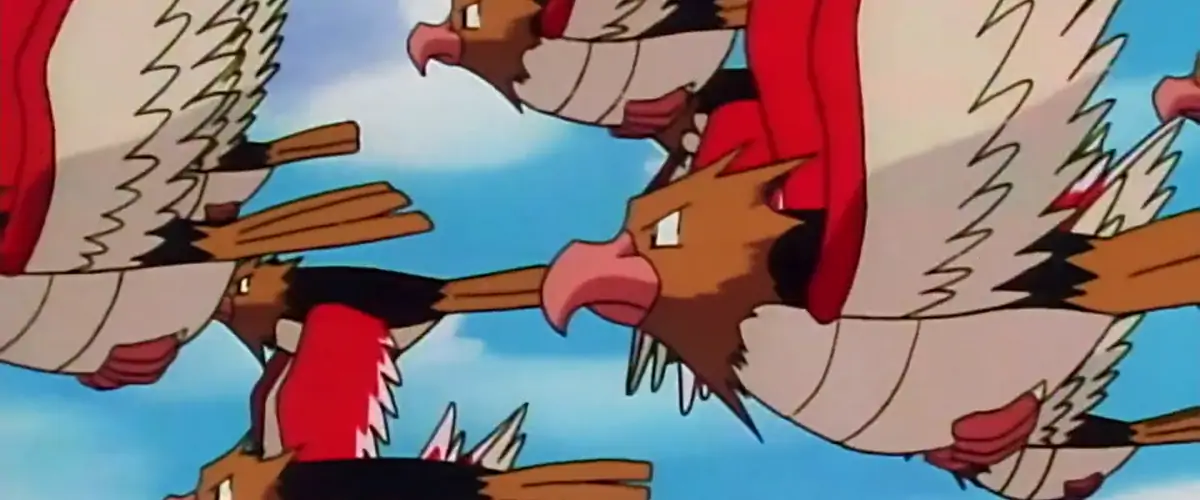
- Although the Bird type was removed, many first-generation Pokémon that resemble birds (such as Pidgey, Spearow, Farfetch’d, Doduo, Articuno, Zapdos, and Moltres) received Flying as one of their types.
- Unlike other unused game elements, the Bird type survived into the second generation, suggesting it may have been considered for implementation longer than other abandoned concepts.
- The Bird type is one of the few elements that was discovered in the game’s code but never officially confirmed by Game Freak or Nintendo.
- If the Bird type were implemented, it could potentially shift the balance of power in the game, especially considering its advantage over Bug and Grass types.
Speculations on Potential Implementation
If the Bird type were implemented, how might it impact the game? Here are some speculations:
- Flying Pokémon Split – Bird-like Pokémon could become Bird-type Pokémon, while other flying creatures (like insects, dragons, or levitating Pokémon) would retain their Flying type.
- New Type Interactions – Introducing the Bird-type could add a new strategic dimension to the game, with unique strengths and weaknesses.
- Move Specialization – Moves directly related to birds (like Drill Peck or Wing Attack) could be Bird-type, while moves related to air and wind (like Gust or Whirlwind) would remain Flying-type.
Bird Type Pokémon Summary
The Bird-type remains a fascinating piece of history – an unused mechanic that survived in the code of the first two generations of games. Although never officially implemented, its discovery provides insight into the creative process behind the series and demonstrates just how much change and adjustment the Pokémon games underwent before their final release.
The fact that traces of the Bird type can be found in the game’s code reminds us that video game development is an iterative process, full of ideas that don’t always make it into the final product. In Pokémon’s case, the decision to replace the Bird type with the Flying type seems wise in retrospect, allowing for greater Pokémon diversity and a more intuitive type system.
Nevertheless, the Bird type remains an interesting „what if” in Pokémon history, leading fans to speculate and discuss an alternative version of their beloved series, one in which birds would have their own unique type.

 Wodzu
Wodzu